Why Vinegar Falls Short in a Sewer Line
A household sewer line is a four-inch pipe that runs many feet from the house to the street connection. A cup of vinegar, or even a gallon, is spread thin and carried away by the first flush. It never reaches the roots or the grease farther down the line.
Vinegar also does not dissolve roots. It does not clear a belly or a cracked pipe, and it cannot clear a plug of paper and grease.
What Actually Works on a Sewer Line
The right tool depends on what is in the pipe.
| Problem | Typical tool | Result |
|---|---|---|
| Roots at a joint | Cutting head on a cable | Opens the line, roots can return |
| Grease coating | Hydro jetting | Scours the pipe wall |
| Paper and wipes plug | Cable or jet | Clears the plug |
| Crack or break | Camera and repair | Fixes the cause |
| Belly with standing water | Camera and repair | Corrects the low spot |
A camera shows which problem you have.
Main line slow or backing up?
Call dispatch for a cable or jetting visit.
Do Not Pour Chemical Cleaners Into a Sewer Line
Caustic cleaners and acid products can sit in a blocked line, damage old pipe and create a hazard when the line is opened. They also rarely reach the blockage.
If you have already used a chemical product, tell the plumber. It changes how the line is opened and how the technician protects themselves.
Who to Call First in Burbank
The South Stickney Sanitary District, at 7801 Lavergne Avenue in Burbank, maintains the sanitary sewer mains. Its 24/7 emergency repair hotline and its office share the same number, 708-424-6030. The district says to call it first on a sewer backup so the mains can be checked.
If the district finds its main is clear, the blockage is in your house sewer. That is the line our crews clear and repair. For flood and regional sewer questions, the Metropolitan Water Reclamation District lists 312.751.6633 in its residents guide.
Source: South Stickney Sanitary District and Metropolitan Water Reclamation District flood guide.
Signs That the Main Line Is the Problem
These signs suggest that the shared line is blocked.
- Several drains are slow or backing up together
- The toilet gurgles when the washing machine drains
- The basement floor drain bubbles or overflows
- Water backs up in the lowest fixture first
- The problem returns within weeks of a cleaning
If these apply, skip the home remedy and call. See sewer line cleaning for what a visit involves.
What a Professional Cleaning Looks Like
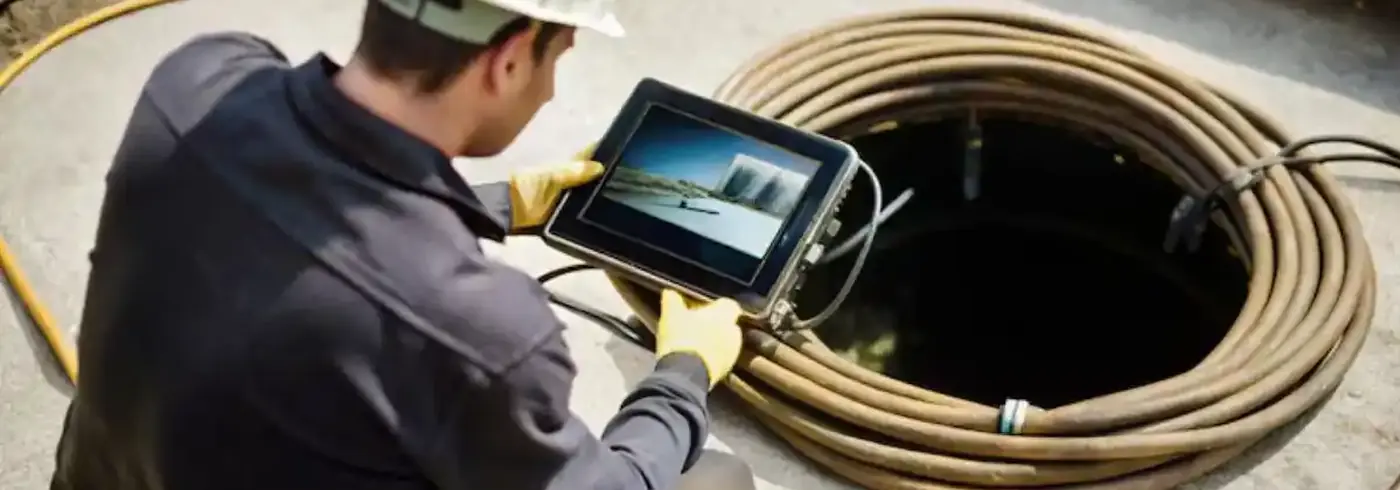
The crew opens the cleanout and runs a cable with a cutting head through the line. If grease or scale is heavy, a jetting nozzle scours the wall. A camera pass afterward confirms that the line is clear and shows the pipe condition.
If the camera finds damage, our sewer line repair service explains the options.
How Often Does a Sewer Line Need Cleaning
A healthy line needs no routine cleaning. A line with fine roots may need it every year or two. Cleaning more than once a year points to a defect that is worth repairing.
Keeping grease and wipes out of the drain extends the interval, and a clear cleanout helps the crew reach the line fast.
Why Roots Keep Coming Back
Roots go where moisture is. A joint that weeps even a little sends out a signal that roots follow. A cable can cut the roots inside the pipe, but the joint is still open, so new roots grow in within months or a few years.
The lasting fix is to seal the joint with a liner or replace the section. Cleaning alone is a maintenance step, and a camera shows whether the cost of repair is worth it.
What a Camera Pass Can Tell You After Cleaning
A clean pipe is the best time to look at it.
- Whether any roots remain at the joints
- Whether the pipe wall is cracked, pitted or flaking
- Whether a belly holds water in the line
- The distance from the cleanout to any defect
- How soon the line is likely to need work again
Ask for the recording. It is a record that you can share with a buyer, an insurer or another contractor.
Signs That the Main Line Needs Attention
A main sewer line problem rarely shows up in just one fixture. Watch for several drains slowing at once, a gurgle in the toilet when the washer drains, or water backing up into the lowest drain in the basement.
Those signs point past the sink trap and toward the line that leaves the house. Stop running water and call a plumber, because every extra gallon has to go somewhere.
Nearby Towns Face the Same Limits
Homes in Stickney and Chicago Ridge have older drain lines like those in Burbank, and the same advice holds. Vinegar will not clear a main line there either.
If a main line is slow, a camera inspection is a good next step. See sewer inspection.
Sources and Standards
The Metropolitan Water Reclamation District publishes guidance on what should not enter the sewer, and the South Stickney Sanitary District maintains the main in Burbank. Camera inspection follows NASSCO practice.
Repairs to a private line fall under the Illinois Plumbing Code, the state standard found in 77 Ill. Adm. Code 890 and administered by the Illinois Department of Public Health.
What to Do When the Main Line Backs Up
Sewage is a health hazard. These steps limit exposure.
- Stop using water in the house at once
- Keep children and pets away from the affected area
- Do not touch sewage without gloves and boots
- Do not mix cleaning chemicals to treat the spill
- Call dispatch and describe which drains are affected
Ask about your insurance policy before cleanup so you do not remove evidence.
Sewer Line Vinegar Questions in Burbank
No. Vinegar does not dissolve roots, and it does not reach the roots in the line. A cutting head on a cable clears them.
It does no harm, but it does not maintain a sewer line. Keeping grease out and checking the cleanout help more.
Call the South Stickney Sanitary District first so it can check the main, and then a plumber if the main is clear.
It is not recommended. It rarely reaches the blockage and creates a hazard for the person who opens the line.
Look in the basement near the floor drain or where the line leaves the house for a capped pipe.
Main line blocked? Call dispatch.