A Backup That Keeps Returning Needs More Than a Cable
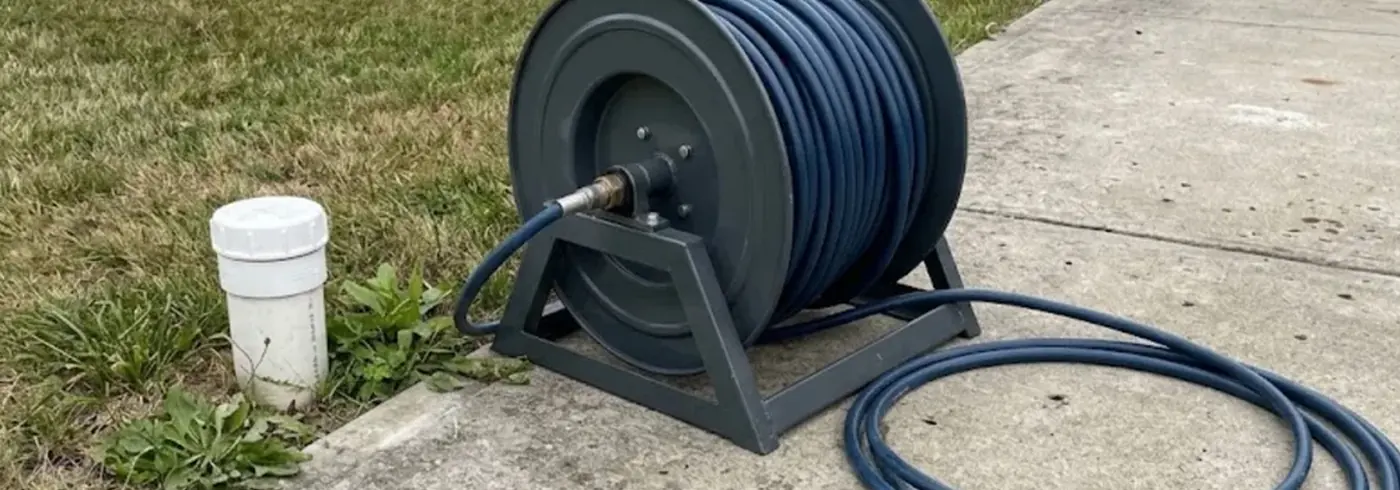
A cable punches a channel through a blockage, but the grease, scale and root hairs on the pipe wall stay in place. Jetting uses a hose and a rotating nozzle to scrub the whole circumference, which is why it is the tool of choice after repeat backups.
If a floor drain is overflowing now, call the line. Jetting is scheduled quickly when a crew is free, and a cable can restore flow first if the situation needs it.
How a Jetting Job Works
The sequence matters, because jetting on a failing pipe can do harm.
Locate the access
The cleanout or a pulled toilet gives the hose a way in.
Look first
A camera shows the pipe material, roots and any breaks before pressure is applied.
Jet the line
The nozzle scours the wall while the hose is withdrawn.
Check the result
A second camera pass shows the clean pipe and any defect left behind.
Drain keeps backing up?
Call dispatch and ask whether a jetting visit is the right fix for your line.
Jetting Compared With Other Methods
No method suits every line. This table shows where jetting fits.
| Situation | Cable | Hydro jetting |
|---|---|---|
| Single hair or paper clog | Good fit | Usually more than needed |
| Grease buildup in a kitchen main | Short-term fix | Best fit |
| Fine roots in a clay or cast iron line | Cuts a channel | Clears the roots from the wall |
| Collapsed or broken pipe | Not a fix | Not a fix. Repair needed. |
| Thin, corroded cast iron | Gentler | Camera check first |
Dispatch will tell you honestly if a cable is enough.
Where Jetting Does Not Help
Water cannot fix a pipe that has collapsed, sagged or separated at a joint. If the camera shows a break, jetting stops and the conversation moves to repair, such as spot repair or a liner.
The sewer line repair page covers those options, and the sewer inspection service explains what the camera reveals.
Know Where the House Line Ends
The South Stickney Sanitary District maintains the public sewer mains that serve Burbank. Jetting that stops at the property line is the homeowner's job, while a clog in the main belongs to the district.
Good Candidates for Jetting
Jetting is a maintenance and recovery tool. These situations are the usual reason for it.
- Kitchen lines coated with cooking grease
- Main lines with recurring tree-root hairs
- Floor drains that clear for a month and then back up
- Commercial kitchen and restaurant drains
- Lines with heavy mineral scale on older iron
Older cast iron can be thin in places, so a camera pass comes first on any pipe of unknown condition.
What Hydro Jetting Costs Depend On
The price follows the line length, the access and the amount of buildup. Dispatch gives a number after learning the symptom and the cleanout location.
The price is confirmed before the hose goes into the line.
Where Jetting Fits in the Standards
Hydro jetting is a cleaning method, not a repair, so it sits outside the plumbing code. What the code cares about is the condition of the pipe afterward. A camera pass that follows the NASSCO inspection standard gives a consistent way to describe cracks, roots and offsets.
Ask for the recording if the line has a history of trouble.
Hydro Jetting FAQ
Yes. The line is open 24/7, and dispatch books jetting when a crew and equipment are available. A cable visit can restore flow sooner when a floor drain is overflowing.
Properly set pressure is safe for pipe in sound condition. We run a camera first, because thin or cracked iron and clay can break under pressure.
It depends on what builds up. A kitchen main with heavy grease may need it yearly, while a line with an occasional root may go longer. The camera view after cleaning guides the schedule.
It clears roots that have grown into the pipe, but it does not stop regrowth if the joint is open. A repair or a liner is the long-term answer for an open joint.
No. Snaking uses a cable to open a hole through a blockage. Jetting uses pressurized water to scrub the entire pipe wall.
Want to know if jetting is right for your line? Call and describe the symptoms.