
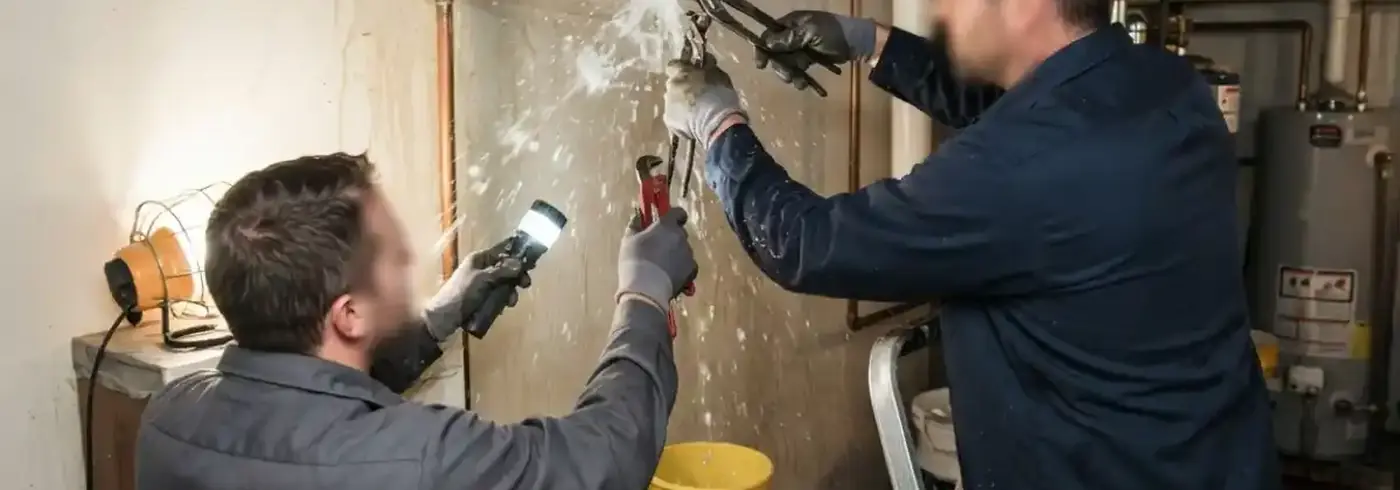
Stop the Water Before Anything Else
Close the valve nearest the leak. Under a sink that is the small stop valve, and for a leaking pipe with no valve nearby it is the main shutoff inside the house. The main is typically near the meter, which the South Stickney Sanitary District says is usually inside the house near the water heater or under a sink.
Open a faucet at a low point to drain the pipe. A dry pipe is easier to repair and less likely to keep leaking.
If You Cannot Shut Off the Water Inside
The district says a frozen or failed service line can be shut off at the curb box near the street, which it calls the Buffalo Box. It needs a special key and may require the district or a plumber.
If the main valve inside will not close, call the 24/7 line right away. A valve that has seized should not be forced.
Pipe leaking right now?
Shut off the water and call dispatch.
Temporary Fixes by Pipe Type
These measures hold water back until a permanent repair. They are not meant to stay.
| Pipe type | Temporary fix | Caution |
|---|---|---|
| Copper | Repair clamp or push-fit coupling | Dry the pipe and clean it first |
| Galvanized steel | Pipe clamp with a rubber sleeve | Old steel often leaks nearby, so plan for replacement |
| PEX | Push-fit repair fitting | Cut the pipe square and clean |
| PVC drain | Repair coupling or wrap | Leave drains unused until repaired |
| Fitting or joint | Tighten gently or replace the fitting | Overtightening cracks fittings |
A repair clamp is only a bridge to a proper fix.
A Simple Repair Sequence
For a small, accessible leak these steps apply.
Stop and drain
Shut the water off and open a tap to empty the pipe.
Dry and clean
Dry the area and clean the pipe surface where the fix goes.
Apply the fix
Fit the clamp or coupling per the maker's directions.
Restore and watch
Turn the water on slowly and watch the repair for several minutes.
Leaks That Need a Plumber Right Away
Some leaks are not worth a temporary fix.
- A leak inside a wall or under a floor
- A burst pipe or a pipe that is spraying
- A leak at the water heater or its relief valve
- Any leak near the electrical panel
- A leak that returns after your repair
See burst pipe repair for emergency steps, and leak detection when the source is hidden.
Protecting the House While You Wait
Move belongings away from the water and lift rugs. Put a bucket under a dripping fitting and towels around it. Turn off electrical power to wet areas if you can do so safely.
Photograph the leak and any damage. If the water reached walls or flooring, call your insurer the same day.
Why Temporary Fixes Do Not Last
A clamp can slip under pressure changes, and a patched pipe is weaker than a new section. Pipes that leaked once often leak again nearby, because the metal is thin in several places.
A plumber will cut out the damaged section and install new pipe and fittings, then test the line under pressure.
Preventing the Next Leak
Most leaks give warnings. These habits catch them early.
- Look under every sink once a month for damp cabinets and green corrosion
- Check the water heater base and the relief valve pipe for drips
- Watch the water meter on a quiet day for movement
- Replace old rubber supply lines with braided stainless ones
- Know where the main shutoff is, and exercise the valve once a year
A leak that is caught while it is small is a small repair.
Documenting a Leak for Insurance
Take dated photos of the leak, the damaged area and any wet belongings. Keep receipts for emergency measures such as fans or towels. Write down when you noticed the problem and what you did.
Ask the plumber for a written note that describes the cause and the repair. Insurers often ask whether a leak was sudden or long-running, and a plain description helps.
When a Leak Is an Emergency
Any leak you cannot stop with a shutoff valve is an emergency. So is water near electrical panels or outlets, a leak that soaks ceiling drywall, or a sudden drop in water pressure throughout the house.
Shut off the main water valve, turn off power to the wet area if you can do so safely and call dispatch. Move valuables out of the way and take photos before cleanup begins.
Common Hidden Leak Locations
Hidden leaks often start at the water heater connections, under the dishwasher, behind the toilet supply line or in the wall behind a shower valve. They show up as stains, soft spots in flooring or a musty smell.
A rising water bill with no change in habits is another clue. Our leak detection service finds the source without opening more of the wall than needed.
Leaks in Neighboring Homes
Homes in Hickory Hills and Bridgeview share the same pipe materials and cold winters. The same steps apply there.
A leak in a rental or a condo may involve the building manager, so report it quickly.
Standards for Temporary and Permanent Repairs
Temporary clamps and push-fit couplings are stopgaps, and permanent repairs follow the Illinois Plumbing Code, the state standard found in 77 Ill. Adm. Code 890 and administered by the Illinois Department of Public Health. Copper fittings follow ASTM B88 tubing standards, and PEX follows ASTM F876.
Use a temporary repair only until a plumber can make a lasting fix.
What to Do the Moment a Pipe Leaks
Fast action limits water damage.
- Shut off the water at the fixture valve or the main
- Switch off power to the wet area if it is safe to do so
- Catch dripping water in a bucket and move valuables away
- Take photos for insurance before cleanup
- Call dispatch if water keeps flowing or the source is hidden
Never reach into water near outlets or cords.
Leak Repair Questions in Burbank
It is usually in the basement near the meter or the water heater. The sanitary district says the meter is typically inside the house near the water heater or under a sink.
Small, accessible leaks can be patched temporarily. A permanent repair is a plumber's job, and leaks inside walls need one right away.
The pipe near the leak may be corroded or weak. The leak can reappear at the next weak spot.
Policies differ. Many cover resulting water damage from a sudden leak but not the pipe repair itself.
Read the meter with everything off. If it moves, call for leak detection.
Leak you cannot stop? Call dispatch.