
What a Slab Leak Means in a Basement Town
Many older homes near Burbank have a basement, so the slab is the basement floor, and most water lines run in the ceiling above it. Leaks under the slab are more likely in additions, garage floors and homes where lines were set into concrete.
The warning signs are the same either way. Water is going somewhere you cannot see, and it keeps running while you sleep.
Signs of a Leak Under a Floor
No single sign is proof, but several together are a strong hint.
A meter that moves with everything off
If the meter dial or low-flow indicator moves when every fixture is off, water is leaking.
A warm spot on the floor
A leak in a hot water line can warm the concrete above it.
The sound of running water
A hiss or rush that continues when no water is being used suggests a leak.
Damp, musty smells or cracked flooring
Water under the slab can lift flooring or leave a musty smell.
Suspect a leak under the floor?
Call dispatch with the meter test result.
Check the Easy Causes First
The South Stickney Sanitary District says the meter is typically inside the house near the water heater or under the sink, and that toilets are the top cause of lost water. Its ten-minute dye test is a quick check for a running toilet.
Rule out toilets and dripping fixtures before you suspect the slab. A leak behind a wall or in a basement ceiling line is far more common and far cheaper to fix.
How a Slab Leak Is Located
Locating the leak matters more than the repair method.
Pressure test
Isolating sections of pipe and watching the gauge shows whether the leak is in the house or on the supply line.
Acoustic listening
A sensitive microphone moved over the floor finds the point where the sound is loudest.
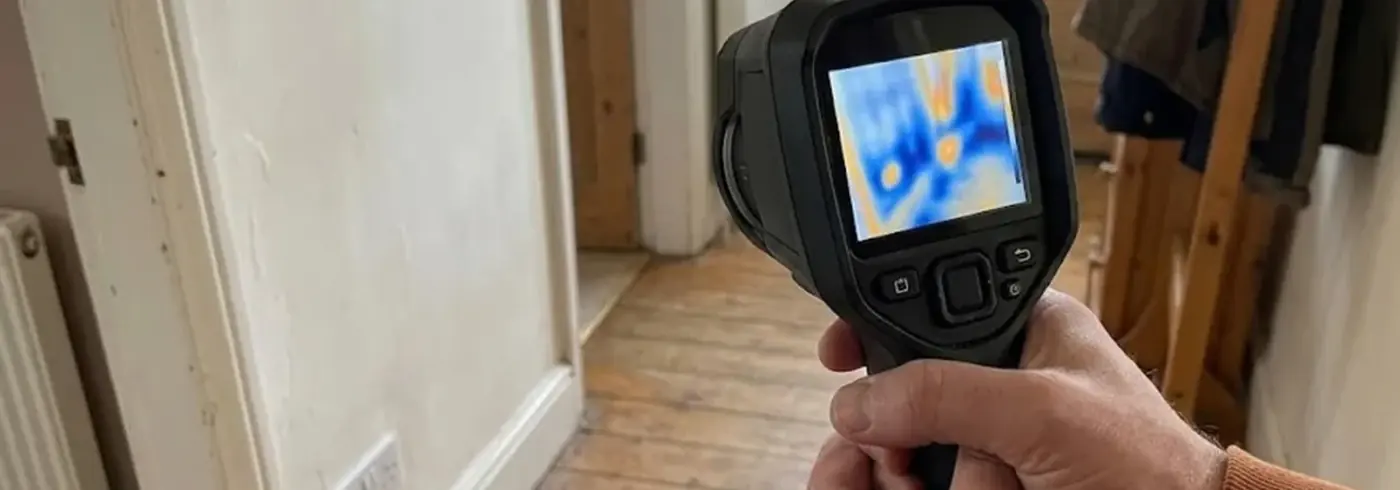
Thermal imaging
A thermal camera can show a hot water leak as a warm patch under flooring.
Repair Options for a Leak Under a Slab
Each option has trade-offs.
| Option | What happens | Best for |
|---|---|---|
| Spot repair | The slab is opened over the leak and the pipe is repaired | A single leak in an accessible spot |
| Reroute | New pipe is run through walls or the ceiling and the old line is abandoned | Lines that leak repeatedly or in several places |
| Pipe lining | A resin liner is cured inside the old pipe | Where access is limited and the pipe is sound |
| Replace the line | A full replacement from the entry point to the fixtures | Old galvanized or corroded lines |
The right choice depends on the pipe, the number of leaks and the floor finish.
Questions to Ask Before You Approve a Repair
These questions protect your budget.
- Where exactly is the leak, and how was it located?
- Can the leak be reached with a small opening?
- Would a reroute cost less than repeated repairs?
- Who repairs the floor finish afterward?
- Does the work need a permit?
A reputable plumber answers all five before starting.
Cost Factors Without the Guesswork
The price depends on how many leaks there are, how deep the pipe sits, what floor covering has to be removed and which repair method fits. A reroute through an open basement ceiling often costs less than breaking finished concrete.
Ask for the price of detection, the price of repair and the price of restoring the floor as separate lines. Our leak detection service gives a clear price before work starts.
Insurance and Documentation
Many homeowners policies cover water damage from a sudden leak, but they may not cover the cost of finding or fixing the pipe itself. Read the policy and call the insurer before you begin repairs.
Take photos of any damage, keep the plumber's written findings and note the dates. These help any claim.
Preparing the House for Slab Work
Clear the area over the leak, and move furniture and stored items out of the way. Cover nearby floors and doorways, because concrete work makes dust. If flooring has to be removed, ask who is responsible for putting it back.
Plan to have the water off for part of the day. Fill a few containers beforehand, and tell the household when the water will return.
Questions to Ask About the Repair Plan
Ask how the leak will be located, how much of the floor must be opened and whether rerouting the line is an option. A reroute can avoid cutting the slab, but it passes the pipe through walls or the attic.
Also ask who handles the floor afterward. Concrete patching, flooring replacement and painting are often separate trades, and it helps to know where the plumber stops.
Nearby Towns and the Same Advice
Homes in Oak Lawn and Stickney that have additions or finished basements face the same questions. A meter test and a quick check for a running toilet come first.
If the leak is on the line from the street, see water service line repair.
Sources for Slab Leak Advice
Repair methods follow the Illinois Plumbing Code, the state standard found in 77 Ill. Adm. Code 890 and administered by the Illinois Department of Public Health and the manufacturer instructions for the pipe used. Water meter testing follows the EPA WaterSense method.
Cost figures are national ranges from published guides and not local quotes.
Slab Leak Questions in Burbank
Less often than in slab-on-grade regions, since many homes have basements and run lines overhead. Additions and garages can still have lines under concrete.
Check toilets with the dye test, look for dripping fixtures and read the meter with everything off.
Sometimes. Rerouting through walls or the ceiling or lining the pipe avoids breaking concrete.
A spot repair is often a day. A reroute can take several days, depending on the house.
A long-running leak can wash soil from under a slab. That is why a hidden leak should not be ignored.
Suspect a hidden leak? Call dispatch.