
What Is in Burbank Water?
Burbank customers receive Lake Michigan water through the South Stickney Sanitary District, which buys it from the City of Chicago. Chicago treats the water at its Jardine and Sawyer plants and uses chlorine as the disinfectant.
In its 2013 quarterly lab reports, Chicago listed hardness between 134 and 143 mg/L as calcium carbonate, which is about 8 grains per gallon by our conversion, and pH between 7.67 and 8.35. Those are 2013 figures, so ask the district for current numbers before sizing a system.
Softener or Filter: Which Solves Which Problem
People often use the terms loosely. They do different jobs.
Water softener
- Removes calcium and magnesium that cause scale
- Protects water heaters and fixtures
- Uses salt and a brine tank
- Does not remove chlorine or lead
Filtration
- Removes chlorine taste and sediment
- Certified filters can reduce lead and other contaminants
- Needs filter changes on a schedule
- Does not soften water
Many homes use both, with a softener at the main and a filter at the kitchen tap.
Scale and hard water at home?
Call dispatch to talk about a softener or filter.
Lead Service Lines and Drinking Water Filters
Chicago states in its 2024 water quality report that homes built before 1986 likely have lead service lines. If your home may have one, ask the district about it, and consider a filter certified to NSF/ANSI Standard 53 for lead at the drinking tap.
A softener does not remove lead. Fluoride in Chicago water measured 0.67 to 0.76 ppm in 2024, and a softener does not remove it either.
What We Install and Repair
The work covers several kinds of equipment.
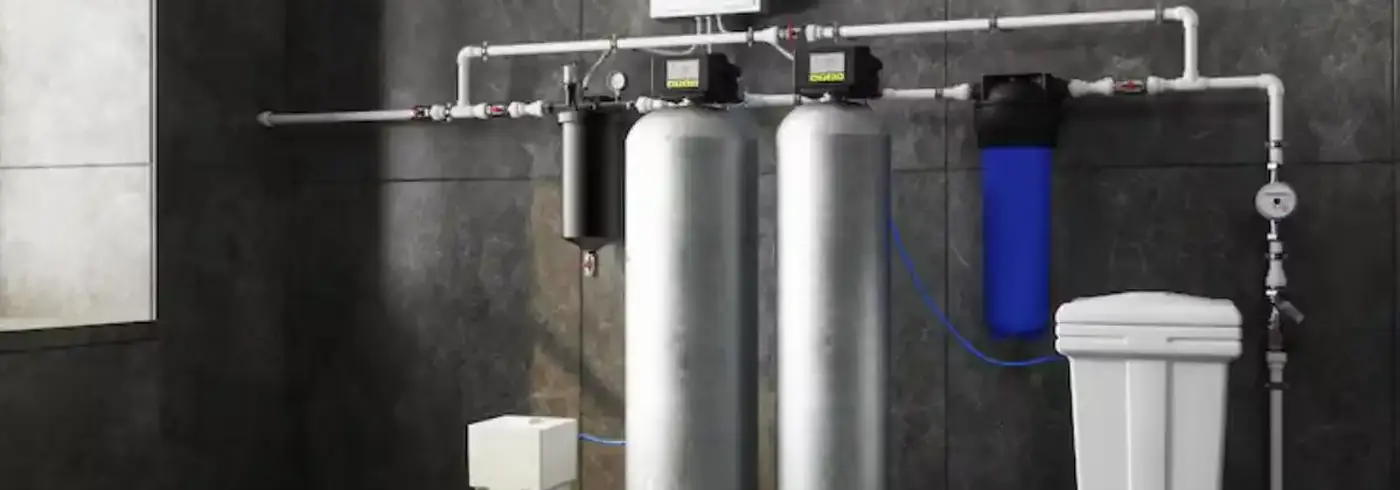
Salt-based softeners
A resin tank and brine tank connected to the main water line, with a drain for the regeneration cycle.
Whole-house and point-of-use filters
Sediment and carbon filters at the main, and under-sink systems for drinking water.
Valve and control repair
Failed control valves, stuck bypass valves and leaking brine lines are among the most common service calls.
Brine tank service
Salt bridges and mushing, a drain that has clogged and a tank that overflows are fixed and the cause is corrected.
How an Installation Goes
A softener installation follows a few steps.
Test the water
We measure hardness at your tap so that the unit is sized properly.
Plan the location
The unit needs space, a nearby drain and an electrical outlet.
Install and bypass
The unit is plumbed into the main line with a bypass valve.
Set the control
We program the regeneration and show you how to add salt.
Drain and Backflow Rules for Softeners
A softener discharges brine during regeneration. The discharge line needs an air gap to prevent backflow into the unit, and it must go to a proper drain.
Never connect the softener discharge to the sump pump line, because the sanitary district says sump pumps must not discharge into the sanitary sewer. Backflow testing for irrigation and commercial devices is covered on our commercial plumbing page.
What Affects Softener and Filter Pricing
The price depends on the size of the system, the number of filter stages and whether the plumbing is ready. Dispatch quotes after learning about your home and water test.
You see the price in writing before work starts.
Hardness Data and Treatment Standards
Water softeners are tested to NSF/ANSI 44, and filters that claim to reduce contaminants are tested to NSF/ANSI 53 or 42. Look for the mark on the box rather than the marketing.
The City of Chicago reported water hardness of 134 to 143 milligrams per liter in 2013. That figure is old, so treat it as a rough guide and test your own water.
Water Softener FAQ
Chicago's 2013 lab reports show about 8 grains per gallon of hardness, which is moderately hard. This is a 2013 figure, so ask the South Stickney Sanitary District for current data.
Hard water leaves scale on fixtures and inside water heaters. If you see scale or spotting, a softener can help.
No. A softener removes hardness minerals. A filter certified for lead at the tap is the right tool for lead.
It depends on use and hardness. Check the brine tank monthly and add salt when it is about a quarter full.
A hard crust has formed above the water. It stops the salt from dissolving, and breaking it up restores operation.
Have water quality questions? Call dispatch.