How a Tankless Heater Works
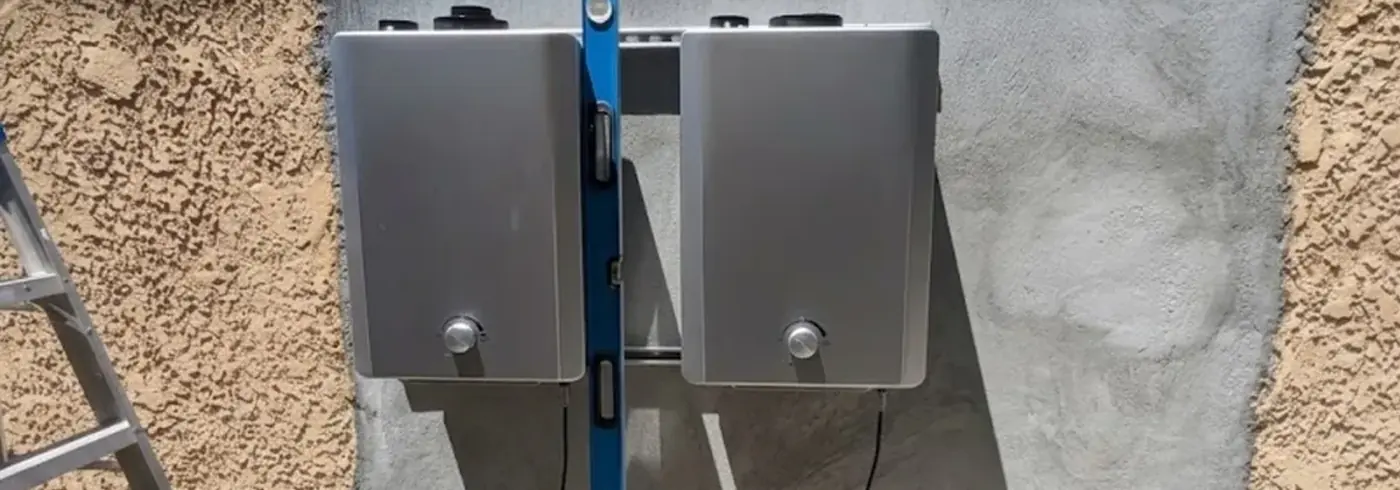
When you open a hot tap, a flow sensor tells the unit to light a burner or energize elements. Cold water passes through a heat exchanger and leaves hot. When the tap closes, the unit shuts down.
The unit has a flow limit. A single shower is easy, and several fixtures at once can exceed what the unit can heat to your set temperature.
Typical Fixture Flow Rates
Federal rules limit showerheads to 2.5 gallons per minute, and WaterSense-labeled showerheads use 2.0 gallons per minute or less. Other fixtures vary. This table shows common demand figures to help you add them up.
| Fixture | Typical flow (gallons per minute) | Often used with |
|---|---|---|
| Showerhead | 2.0 to 2.5 | Second bathroom |
| Kitchen faucet | 1.5 to 2.2 | Dishwasher |
| Bathroom faucet | 1.0 to 1.5 | Shower |
| Dishwasher | About 1.5 | Kitchen faucet |
| Washing machine | About 2.0 | Shower |
Add up the fixtures that run at the same time. That total sets the minimum capacity.
Weighing a tankless upgrade?
Call dispatch to talk through sizing, gas and venting.
Winter Is the Hard Test
A tankless heater must raise the incoming water temperature to your setting. Winter supply water in the Chicago area can fall into the 40s Fahrenheit or lower, so a unit that handles two showers in July may struggle with the same load in January.
Ask for a sizing based on winter temperature rise, not summer. A unit sized for the cold months will cope year-round.
The Gas Line and the Vent
Most Burbank homes use a gas tank heater today, and a tankless unit changes two parts of the installation.
Gas line capacity
Tankless units draw a high volume of gas for a short time. The existing line and meter may need upgrading to deliver it.
Venting
Condensing models use plastic pipe and a condensate drain. Non-condensing units need stainless steel venting. Both must follow manufacturer rules and local code.
Electrical and water
The unit needs an outlet for controls, and isolation valves for flushing. Hard water makes these valves vital.
Chicago Water Is Moderately Hard
Chicago supplies Lake Michigan water to the South Stickney Sanitary District, and its 2013 quarterly lab reports listed hardness of 134 to 143 mg/L as calcium carbonate, about 8 grains per gallon by our conversion. That is a 2013 figure, and the district can share the current value.
Hard water forms scale on the heat exchanger of a tankless unit, which cuts flow and raises the risk of error codes. A yearly flush through isolation valves is part of owning one in this area.
Source: City of Chicago Department of Water Management quarterly water quality reports (2013). Conversion to grains per gallon is ours.
Questions to Ask Before You Buy
These questions prevent most regrets.
- What is the unit's flow at a winter temperature rise?
- Does the existing gas line support the unit's peak demand?
- Where will the vent terminate, and is it code compliant?
- Are isolation valves included for flushing?
- Who handles the permit and the city inspection?
Our tankless water heater service covers installation, descaling and error code repair.
Permit and Code Basics in Burbank
The City of Burbank Building Department says a permit is required for construction or alteration of plumbing and that all contractors must be licensed. It also offers a free inspection on gas water heater replacement that looks at ventilation, the safety valve and the connections.
Ask the installer to confirm the permit steps before work starts. The department is at 6530 W 79th Street and answers at 708-599-5500, option 2.
A Simple Yearly Routine for Tankless Owners
A tankless unit asks for little attention, but the attention it needs is regular. This routine keeps the heat exchanger clear and the unit safe.
- Flush the heat exchanger once a year with a descaling solution or white vinegar through the service valves
- Clean the inlet water filter screen when you flush
- Check the vent and the condensate drain for blockage
- Look at the error code history if the unit stores one
- Test the carbon monoxide alarm near the unit
A unit that is flushed on schedule keeps its rated flow. A unit that is ignored slowly loses it, and the first sign is often a shower that never gets quite hot enough.
Budgeting Without a Number You Cannot Trust
Total cost for a tankless job is the unit plus the gas line, the vent, the plumbing changes and the permit. Two homes with the same unit can end up with very different totals because of those extras.
The honest way to budget is to ask for a written price after a site visit. Compare that price with a tank replacement, and decide whether the added cost is worth hot water on demand and the extra wall space.
Where Tankless Fits Best
Tankless works well for smaller households, for homes with limited floor space and for people who want hot water on demand. It also suits additions where running a tank would be difficult.
Homes in nearby Chicago Ridge and Hickory Hills often have basements that can accommodate either style, so the choice comes down to usage and budget.
Sources for Tankless Advice
Gas installation advice follows NFPA 54, the national fuel gas standard, and the manufacturer instructions. Hardness figures come from published City of Chicago water reports.
Cost ranges are national and come from published cost guides, not from local quotes.
Tankless Questions in Burbank
Many manufacturers rate tankless units for longer life than tanks, but only if they are flushed and maintained. Scale from hard water shortens life.
It depends on the unit and the temperature rise. A unit sized for winter can usually run two showers, and a smaller one cannot.
The city requires a permit for plumbing alteration. Dispatch explains how that applies to your installation.
Many manufacturers advise yearly flushing, and hard water makes it more important.
Most units need electricity for controls, so they stop when power fails unless on a generator.
Questions about going tankless? Call dispatch.